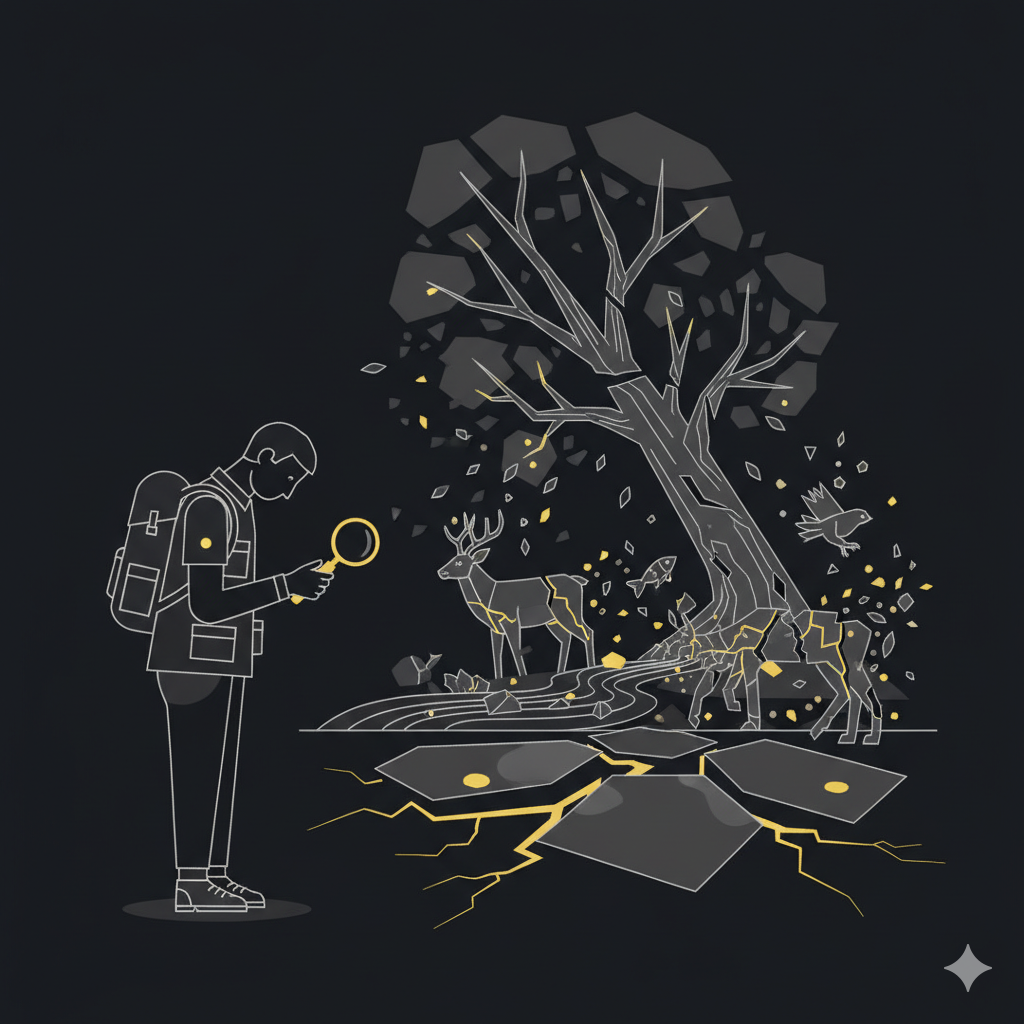
Environmental Governance in Tunisia: Challenges, Opportunities, and Key Developments
Environmental governance plays a crucial role in protecting the natural resources and biodiversity of Tunisia, as well as addressing the impacts of climate change and other environmental challenges. Tunisia, previously known as Afrikia, is the country that gave its name to the African continent and is located at the northernmost extent of the continent.
This strategic geographic position has been home to many civilizations and cultures, including the Phoenician and Carthaginian empires, the native Amazigh (Berber) and Tuareg people, the Roman Empire, the Islamic empire, and the Ottoman Empire. From 1881 until 1956, Tunisia was colonized by France, and the first Tunisian republic was established in 1956 under the presidency of Habib Bourguiba.
Tunisia is a diverse country with a long and rich history. Education and scientific research have traditionally been important in Tunisians life, though environmental studies, conservation, and ecology have not always been a focus. It is home to over 7,500 species of fauna and flora, and approximately 3,700 species of marine ecosystems. It also has a long coastal line and over 50 small islands, some of which have unique and endemic biodiversity. However, the country’s natural resources have not always been well managed and protected.
In this article, we explore the key developments and challenges in international and national environmental governance in Tunisia. We examine the country’s engagement with international environmental agreements and conventions, as well as its performance in terms of environmental protection compared to other North African countries.
Multilateral Agreements and Domestic Legislation
Environmental policy in Tunisia has largely focused on international agreements and conventions. The nation’s first multilateral convention was the African Convention on the Conservation of Nature and Natural Resources, signed in 1968 and entered into force in 1979. This convention aimed to encourage the conservation of soil, water, flora, and fauna for the benefit of African people. However, there has been little reporting or monitoring on the progress of this convention under the African Union.
Tunisia also joined the Convention on International Trade in Endangered Species of Wild Fauna and Flora in 1974, but illegal wildlife trade remains a problem in the country. In 1988, Tunisia founded the National Agency for the Protection of the Environment to establish policies for reducing pollution and protecting the environment.
Environmental Performance in a Regional Context
The environment in North Africa, which is often associated with the Middle East and North Africa (MENA) region, is influenced by its nature and geography. However, North Africa is culturally, geographically, historically, and naturally distinct from the Middle East and should therefore be considered separately in assessments and considerations.
Tunisia’s environmental policies were compared to those of other North African countries using five indicators from the Environmental Protection Index (EPI). Tunisia scored significantly higher in terms of terrestrial biome protection than Morocco and Algeria, with a score of 32 compared to 7.1 and 12.
Environmental Governance: Challenges and Complexities
Environmental governance in Tunisia is complex, with various ministries and agencies involved in decision-making. The Ministry of the Environment and the Ministry of Agriculture are the main governmental authorities in this area. However, the division of responsibilities between these agencies can be difficult to navigate and can lead to inefficiencies.
Colonial Legacy and Its Impact
Tunisia’s colonial past has had a lasting impact on its natural ecosystems. During the colonial period, the French authorities in North Africa used reforestation as a way to gain control over the land. Non-native species like Eucalyptus were introduced. Today, seven decades after independence, authorities continue to plant Eucalyptus and other potentially invasive species in natural reserves.
Pre-Revolutionary and Post-Revolutionary Governance
The Arab Spring revolution in 2011 was a response to the dictatorship that had ruled Tunisia for many years. Since the revolution, the country has been working towards democratization, including the democratization of the environment. However, this process has been slow and has faced many challenges.
Despite these challenges, there have been many positive changes since the revolution. Freedom of speech has been granted, leading to the formation of many NGOs and a more dynamic civil society.
Current Challenges
Coordination between governmental institutions, civic society, and research institutions is either absent or weak. There is also a lack of clear environmental strategies that consider a holistic set of social, environmental, and economic factors.
Most conservation projects in the country are done by non-governmental organizations funded by international organisms: United Nations, embassies, WWF, IUCN, critical ecosystem partnership funds (CEPF), and MAVA.
Research Institutions
Research institutions are not doing enough for wildlife management, biodiversity, conservation and ecology. The majority of taxonomic studies were done by French or European naturalists during colonization. After independence, colonial science and parachute science still remain existing due to weak structure and governance.
Few programs exist for Tunisian students to strengthen their proficiency in conservation, ecology, and wildlife management. The only known master in ecology is at the faculty of sciences of Tunis — University El Manar, accepting 20 students per year with only a mean of 3 ecologists formed each year.
Bridging the Gap: Strategies for Enhancement
Recommendations for Authorities
Ministry of the environment and Ministry of agriculture should work to clearly define and implement strategies for conserving biodiversity and ecosystems, including creating a permanent research unit in each national park.
Tunisia is still a country with very new and short experience where fundamental strategies to conserve biodiversity and ecosystems are still to be clearly defined and implemented. The Tunisian National Strategy and Action Plan for Biodiversity (2018–2030) under the CBD convention is the most complete attempt, yet implementation is still absent and unevaluated.
In National Parks management, every national park should have a permanent research unit to ensure permanent monitoring of biodiversity. Conservation in-situ and ex-situ should be fostered. Ecotourism is a good way to generate resources and serve as an elevator for national parks development if done wisely.
Communication and Education
Authorities should enhance their communication strategies and work on solidifying basic knowledge about our national biological heritage. Having better understanding can reduce Human-Wildlife Conflicts (HWC). Removing ambiguities through audiovisual educational content can change Tunisians’ perception on biodiversity.
Academic Programs
Tunisia needs to establish academic programs in different regions at various educational levels (Bachelor, Master, PhD) to teach applied ecology, wildlife management and conservation. These programs need to enhance students’ skills in writing project proposals and applying for funding.
Research Coordination and Technology
Research institutions should centralize previous research publications and project reports on a single platform. They should foster the use of new technologies: artificial intelligence, machine learning, bioacoustics, remote sensing, and mathematical modeling in ecosystem study and monitoring.
Natural History Museum
Tunisia should start working seriously toward building its first Natural History Museum. This would be the first of its kind in the North African region (Egypt, Libya, Tunisia, Algeria, Mauritania), presenting a pioneering opportunity for Tunisia to present North African biodiversity in a unique way.
References
Baumann, Hannes. “A failure of governmentality: Why Transparency International underestimated corruption in Ben Ali’s Tunisia.” Third World Quarterly 38.2 (2017): 467–482.
Chomiak, Laryssa. Tunisian democracy 10 years after the revolution: A tale of two experiences. Briefing Paper, 2021.
Ford, Caroline. “Reforestation, landscape conservation, and the anxieties of empire in French colonial Algeria.” The American Historical Review 113.2 (2008): 341–362.
Houdret, Annabelle, Irene Pasqua, and Saâd Filali Meknassi. Access to environmental information: a driver of accountable governance in Morocco and Tunisia? Briefing Paper, 2018.
Loschi, Chiara. “Local mobilisations and the formation of environmental networks in a democratizing Tunisia.” Social Movement Studies 18.1 (2019): 93–112.
Pagad, Shyama, et al. “Introducing the global register of introduced and invasive species.” Scientific data 5.1 (2018): 1–12.
Wolf, M. J, et al. (2022). 2022 Environmental Performance Index. Yale Center for Environmental Law & Policy.
WWF, 2021. Étude portant sur l’identification des moteurs de la perte de biodiversité et des secteurs clés impactant la biodiversité en Tunisie.
Originally published on Medium: Environmental Governance in Tunisia